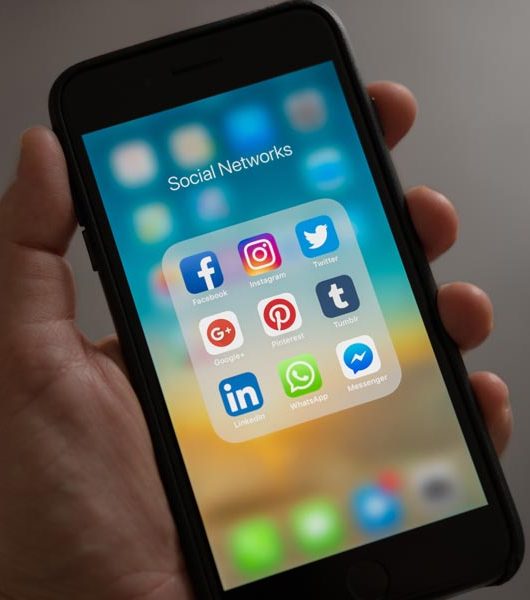

Open your phone for a second and check how many apps you used today. Banking, food delivery, messaging, and maybe fitness or travel. Now imagine if those services asked you to visit a website every single time instead. Would you still use them as often?
This small shift in behavior says a lot about how people interact with businesses today. Phones are no longer just devices we carry; they’ve quietly become the main doorway through which customers access services. According to a mobile usage overview from Statista, billions of people now rely on smartphones daily, and a huge portion of that time happens inside apps rather than web browsers.
So here’s the real question business owners eventually face: when does a website stop being enough?
Maybe customers keep asking for faster booking. Maybe your support team handles the same requests again and again. Maybe your website works fine, but something about the experience still feels slower than it should.
Below are the moments when investing in a custom app stops being a luxury and starts becoming a strategic move.
1. Your Website Is Doing Too Many Jobs
Many growing businesses push their websites to handle everything: sales, support tickets, customer dashboards, booking systems, notifications, and internal workflows. Eventually, the structure starts to feel stretched. Pages become complex, and user journeys turn messy.
That’s often the point where businesses start exploring what a dedicated mobile product could offer beyond what a traditional website can. While researching the process, many teams come across services such as DreamWalk Apps that break down how companies move from a simple idea to a fully developed mobile application. When those everyday interactions become easier and more direct, customers tend to return more often.
When your digital environment starts to feel like a patchwork of plugins and fixes, it’s usually a sign that a dedicated platform could streamline things.
2. Your Customers Interact With Your Business Frequently
Some services are used once in a while. Others become part of a routine. Think about food delivery, banking, transportation, or fitness tracking. These experiences work best when they live a tap away from the home screen. If your customers repeatedly visit your website to perform the same actions, booking appointments, checking order updates, managing subscriptions, an app removes friction.
A well-designed mobile interface reduces steps, remembers user preferences, and simplifies repeat interactions. Customers don’t have to search for your business again or re-enter details. They simply open the app.
In industries where engagement matters more than one-time transactions, that difference can reshape retention rates over time.
3. Your Business Relies on Real-Time Interaction
Certain operations simply work better in real time. Delivery tracking. Service technician updates. Appointment reminders. Inventory alerts. Customer messaging.
Websites can handle some of this, but apps unlock native features like push notifications, GPS integration, camera access, and offline functionality. These tools allow businesses to respond instantly to changing conditions or customer actions.
A logistics company, for example, can notify customers when a package is nearby. A healthcare provider can send appointment reminders or prescription alerts. A fitness brand can automatically track daily progress. Those real-time signals create a feeling of responsiveness that browsers struggle to replicate.
4. Your Team Is Constantly Working Around Operational Inefficiencies
Sometimes the strongest argument for a custom app doesn’t come from customers at all; it comes from employees.
If staff members are juggling spreadsheets, third-party tools, messaging apps, and manual processes just to complete routine tasks, something in the workflow is broken. Over time, these inefficiencies cost both time and morale. A custom app can centralize internal operations, including field reporting, order processing, inventory tracking, staff communication, and service documentation.
Instead of jumping between tools, employees interact with a single environment built around how the business actually works. That difference may not always be visible externally, but internally, it can change productivity in measurable ways.
5. Your Competitors Are Building Stronger Digital Experiences
When one competitor introduces a smoother mobile experience, faster ordering, easier booking, and personalized notifications, customers begin to notice. That’s when expectations shift. Research shows that around 64% of internet users prefer using a mobile app to a website when interacting with a brand, mainly because apps feel faster and more convenient.
This doesn’t mean every business must rush into building an app simply because others have one. But when competitors begin using mobile platforms to remove friction from customer interactions, ignoring that shift can slowly erode engagement.
Customers gravitate toward whatever option feels easier. An app becomes less about novelty and more about maintaining parity in the experience you provide.
6. You Want to Offer Personalization at Scale
Customers rarely respond to one-size-fits-all experiences anymore. People are used to services that remember them, what they like, what they usually do, and how they prefer to interact. When a platform feels tailored to them, they naturally spend more time using it.
An app can quietly adapt to each user by offering features such as:
- Saved preferences that remove the need to repeat actions
- Personalized recommendations based on past activity
- Location-based updates or offers
- Notifications that match user behavior and interests
Over time, these small adjustments create a smoother experience. The service begins to feel familiar and intuitive, which often encourages customers to return more frequently.
7. You’re Planning Long-Term Digital Growth
Sometimes the clearest signal isn’t a current problem, it’s a future plan. Businesses expecting steady growth often start thinking about the digital structure that will support that expansion. A website may work perfectly today, but as services grow, new features, integrations, and customer tools can make the platform feel crowded or difficult to manage.
A custom app can gradually become the central space for those interactions. It allows businesses to introduce memberships, service updates, loyalty features, and personalized experiences without constantly restructuring their website. Instead of rebuilding digital systems every time the company expands, the app evolves alongside the business, supporting new ideas and customer needs as they develop.
Conclusion
Investing in a custom app rarely happens because of a single moment. More often, it’s the accumulation of small signals: repeated customer actions, operational inefficiencies, rising expectations, and the realization that a website alone can’t deliver the experience your audience now expects.
When interactions become frequent, services become more complex, and personalization starts to matter, mobile apps shift from being a nice addition to becoming a practical tool.
Businesses that recognize this transition early usually aren’t chasing technology trends. They’re responding to how people actually prefer to interact, with speed, simplicity, and a tap on the screen.